
Chimney repair in Lafayette.
Repairs to crowns, caps, flashing, masonry joints, firebrick and liners, made early, so water and heat stay where they belong.
- reviews on Googleas of
Office Mon to Fri 7 AM to 7 PM, Sat 8 AM to 5 PM. Book online any hour.Office open now, until Office opens . Book online now.
- Book onlineAny hour
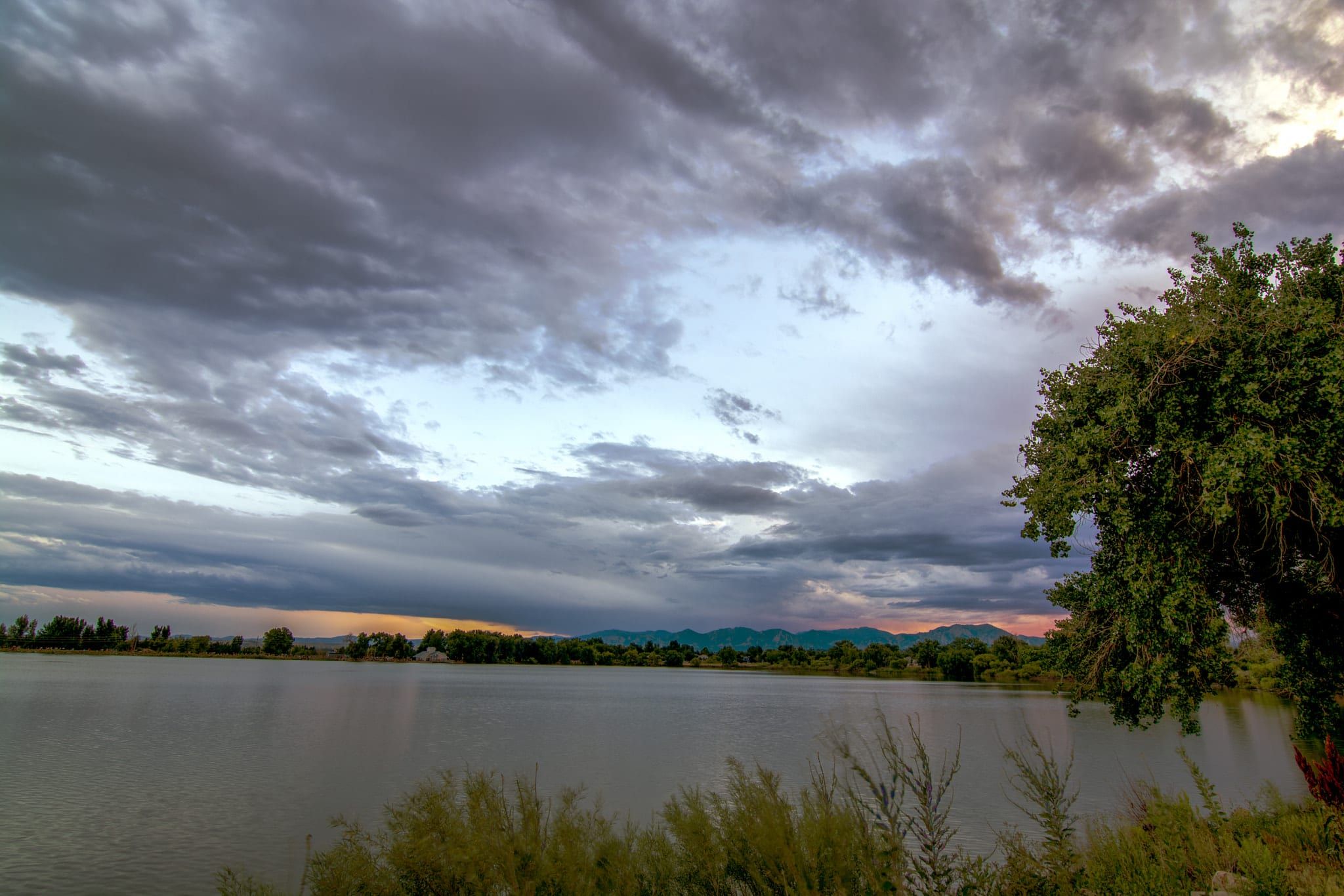
Photo: Waneka Lake clouds (500px photo 75905133), Makia Minich, CC BY-SA 3.0
What we repair, top to bottom.
Each part of a chimney fails in its own way. These are the repairs that come up most, and the Lafayette weather behind them.
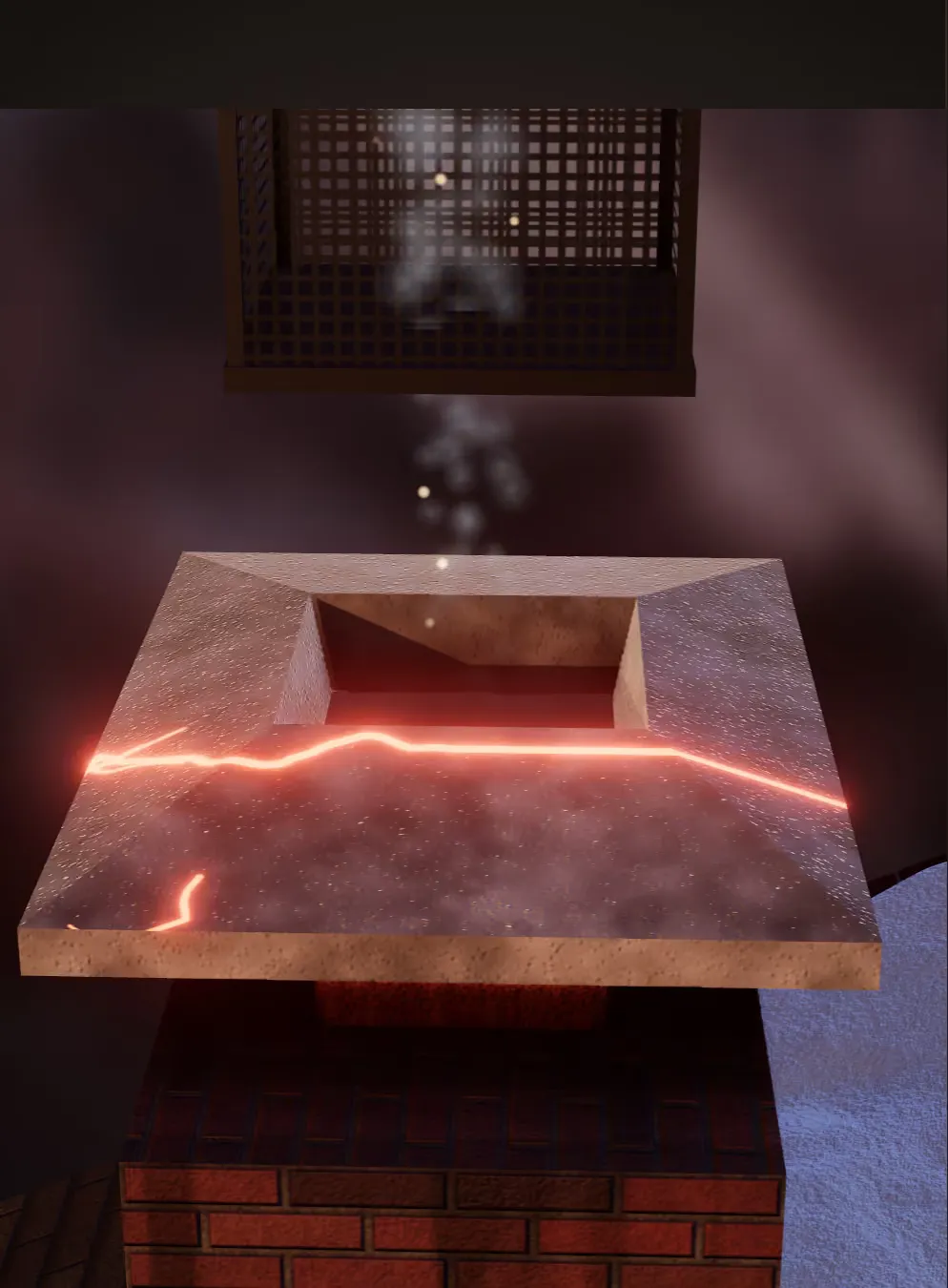
Crowns.
The crown is a concrete cap poured over the top of the masonry. It throws water off the brick and the flue, and it takes the worst a Lafayette winter offers: frost at night, thaw by noon, frost again.
Water in a hairline crack swells by about 9% as it freezes, so the crack grows with every cycle. Seal a hairline crack while it is still small. A crown that has crumbled or separated from the flue tile needs to be rebuilt.
Illustration Caps and spark screens.
A cap stops rain, snow, birds and squirrels at the top of the flue. The screen in it is the spark arrestor, and the model International Residential Code (R1003.9.2, 2021 edition) gives it openings of 3/8 to 1/2 inch.
Wind is a cap's other enemy. On December 30, 2021 the National Weather Service recorded a 68 mph gust in Louisville, next to Lafayette; strong wind loosens fasteners and tears screens long before a cap comes off.
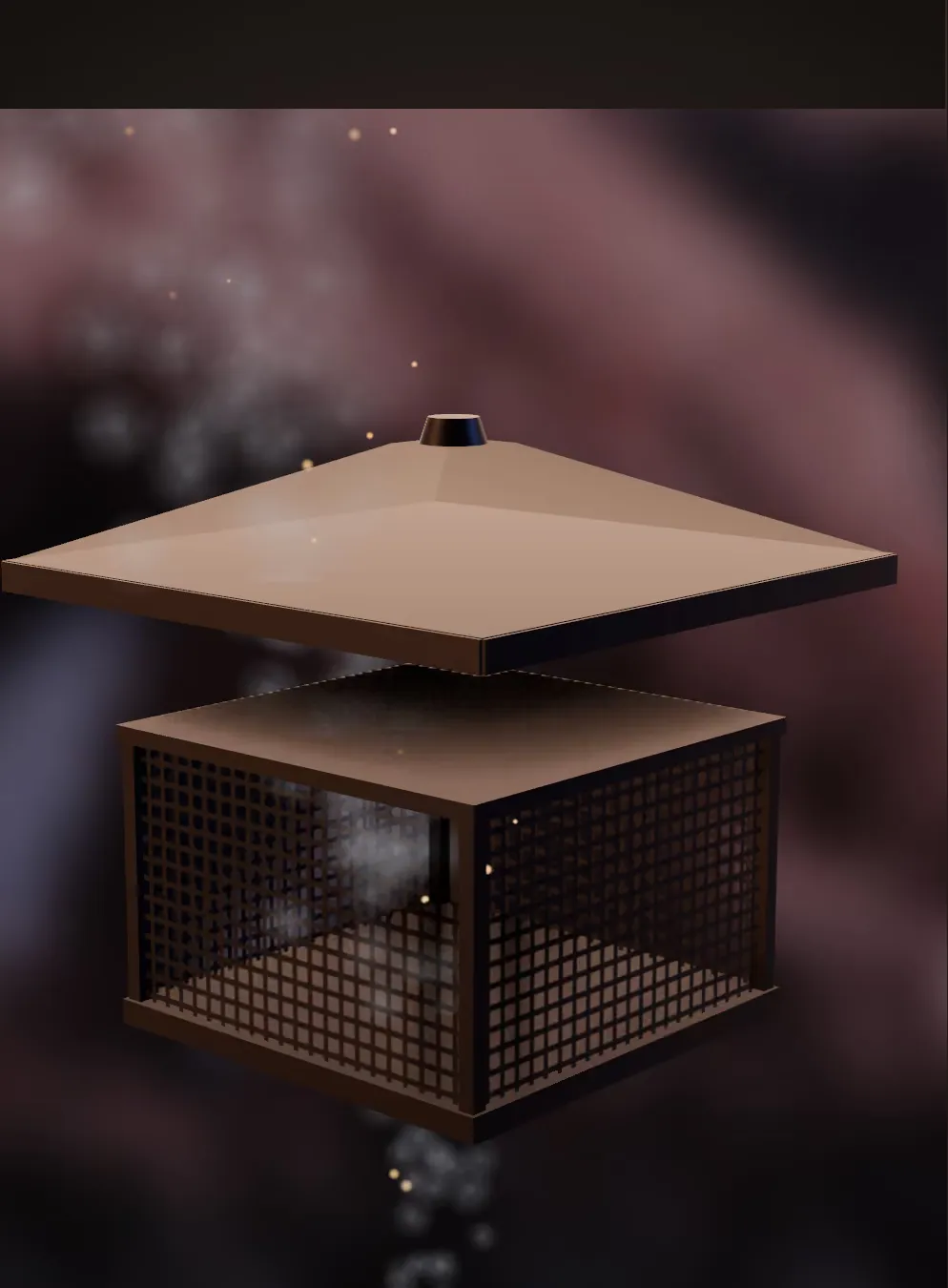
Illustration Flashing at the roofline.
Flashing closes the gap where the chimney passes through the roof. Snow banks on the uphill side and melts slowly, exactly where a lifted edge or tired sealant lets water in. The earliest clue is usually a stain on a ceiling or in the attic, next to the chimney rather than on it.
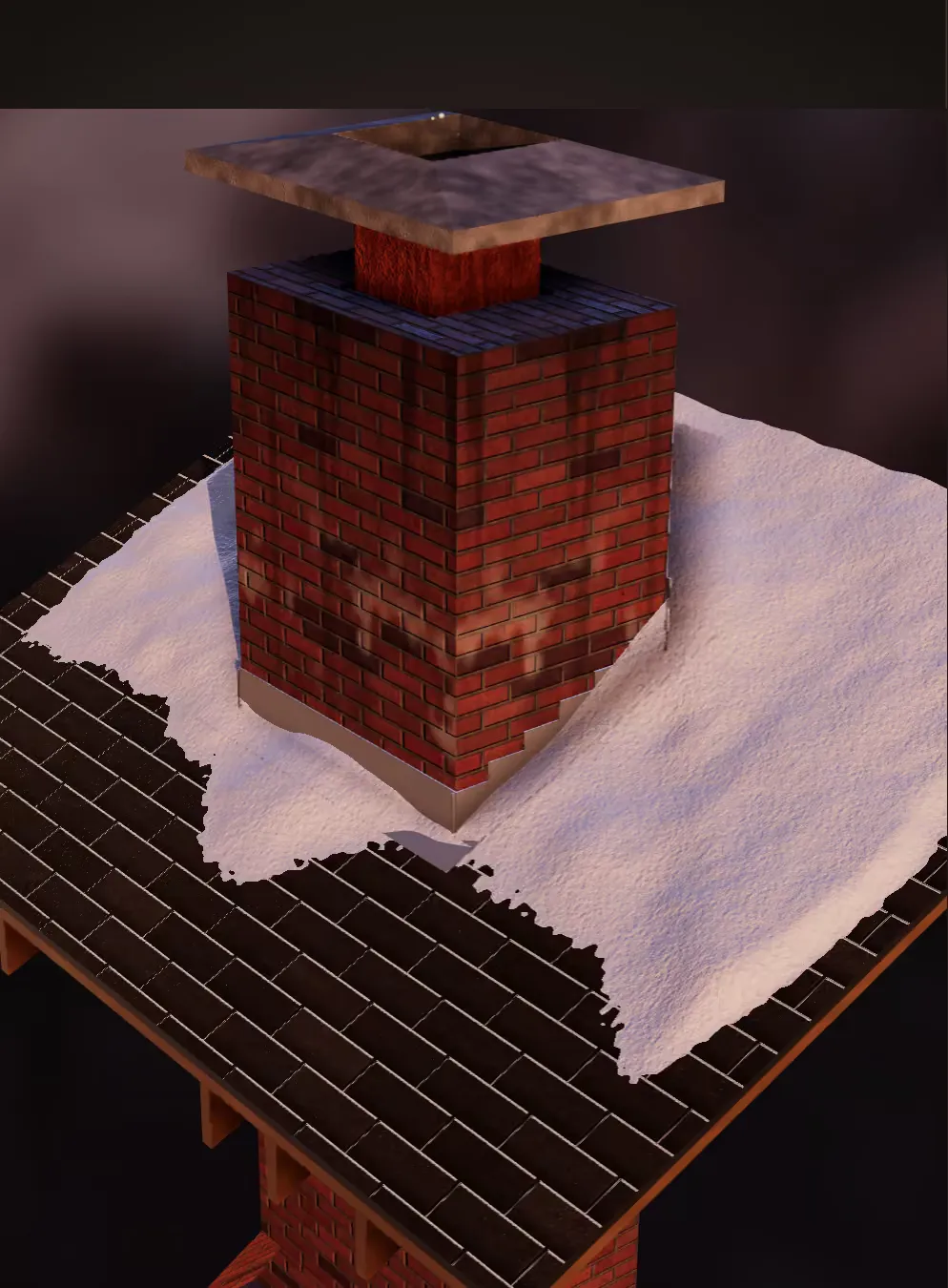
Illustration Firebox.
Firebrick and refractory mortar take the heat of the fire directly. Open joints and cracked brick let that heat through to whatever sits behind the firebox, so small repairs here protect the framing around the fireplace.
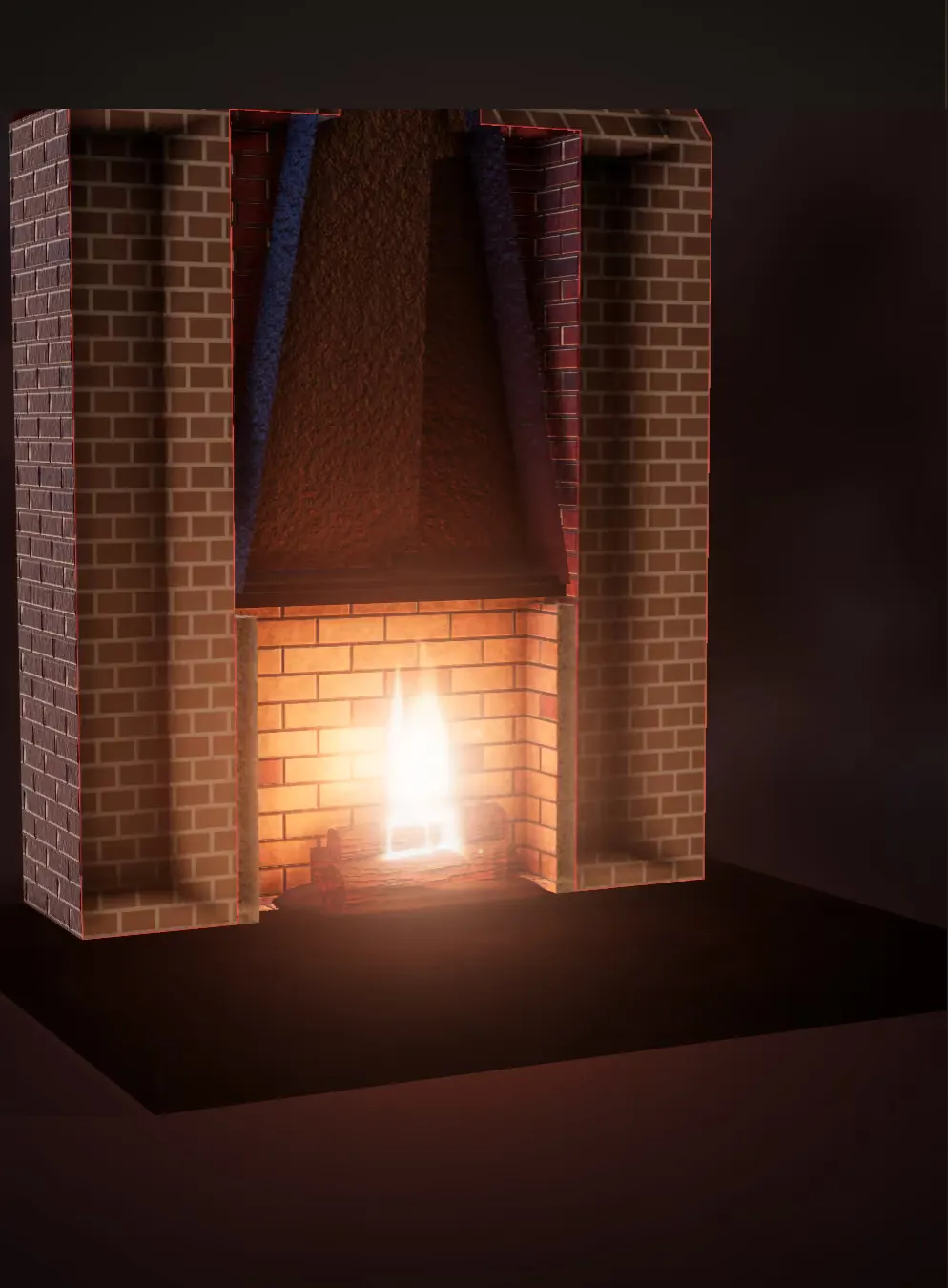
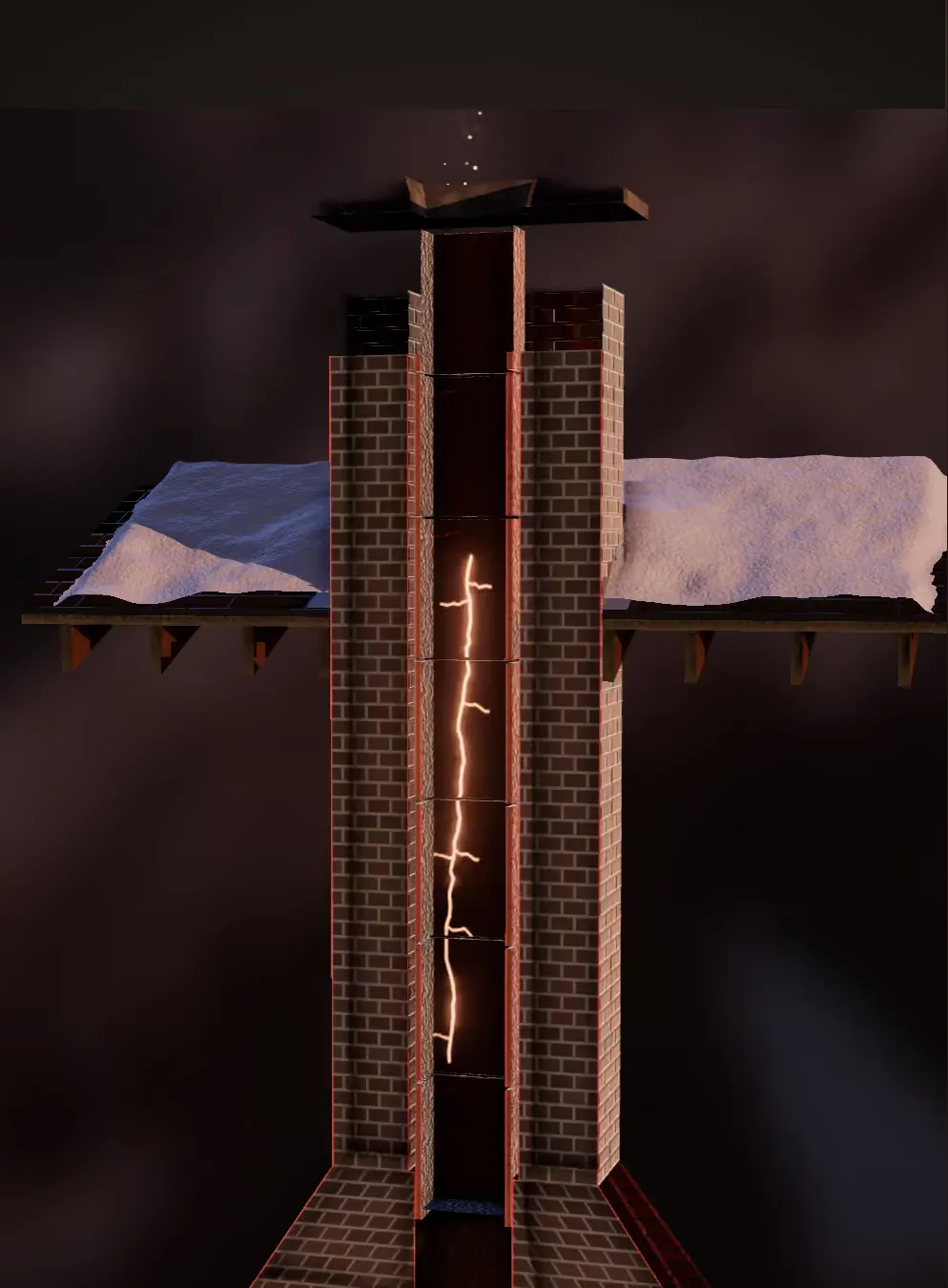
Illustration Flue liners.
The liner carries smoke and heat up through the middle of the chimney. A cracked or shifted tile can pass heat to the framing and let gases into the house, yet it is seldom visible from the firebox or the roof. It comes to light in the camera scan of the flue that is part of a Level 2 inspection.
Illustration
Questions about repairs.
Plain answers, and the source where there is one.
Why do chimney crowns crack?
The crown is the concrete slab that tops the chimney. Winter freezes and thaws it again and again, and water in a hairline crack swells by about 9% as it turns to ice, opening the crack a little more. Caught early it is a minor repair; left alone, it lets moisture into the brickwork and the flue.
Is a wet firebox a sign of chimney trouble?
Usually. Moisture in the firebox, or a ceiling stain near the chimney, typically comes from one of four places: a cap that is missing or damaged, a crown with cracks, flashing that has failed, or mortar joints that have opened. An inspection shows which.
What is tuckpointing?
Renewing worn mortar between bricks. It is meant to wear before the brick does, but once joints open water reaches behind the brick face and frost does the rest. Repointing early stops the bricks from loosening.
Do I need a chimney cap?
In practice, yes: a cap blocks rain, snow, birds and squirrels, and its screen doubles as the spark arrestor. The model International Residential Code (R1003.9.2, 2021 edition) specifies openings from 3/8 to 1/2 inch, small enough to stop embers while staying open enough not to clog.
Will you explain what needs fixing before work starts?
The plan is to look over the whole chimney, cap to firebox, and explain what we found before any work begins. What gets done, and when, is up to you.
How do I ask about a repair?
Call (303) 590-3768 (Mon to Fri 7 AM to 7 PM, Sat 8 AM to 5 PM), or send the form on this page at any time and describe what you have noticed.
Book a visit.
Send the form with what you need and we ring you to settle a time.
- 1Book By phone, or with the form.
- 2Callback We ring to agree a time.
- 3Inspection We start at the cap and work down.
- 4Decision You choose what is done, and when.
Online
Any hour, through this form
Photo: Waneka Lake east shore panorama with Front Range, Mikepascoe, CC0
Something off with the chimney, or just ready for the first fire of the season?
Office Mon to Fri 7 AM to 7 PM, Sat 8 AM to 5 PM. Book online any hour.Office open now, until Office opens . Book online now.
Book online